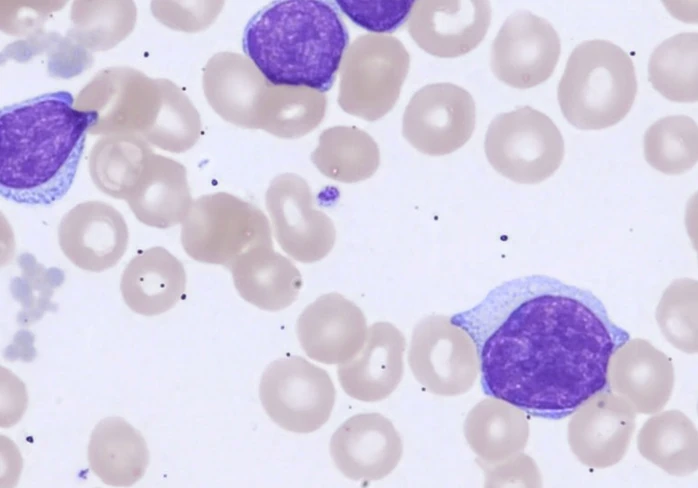
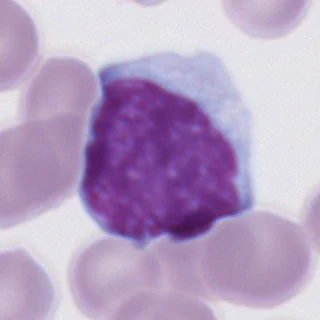
Lymphocytecertified
Every classifier gives you answers. Hemalogic gives you something rarer — a calibrated guarantee about which answers to trust. Each cell resolves to one of two states, and the second is not a failure. It’s the point.
Proven, not predicted. Certification is tuned for the number a lab cares about most: false negatives — kept rare, and measured rather than assumed.
Measured: across held-out research data, more than 99.5% of certified calls were concordant with expert classification.
When a cell falls outside what the model can prove, it says so — and shows its work: the measurements, the near-misses, the reason for doubt.
The abstention is signal. A population the model declines to name is information no forced label could ever give you.
Everything below was measured on public, expert-annotated research datasets, with pre-registered splits and near-duplicate audits — scored the way we would want to be audited. Internal validation results, not clinical performance claims.
Cells drawn from the MLL23 public research dataset. The final example is deliberately outside the eight-class normal vocabulary — the system abstains rather than forcing a label.
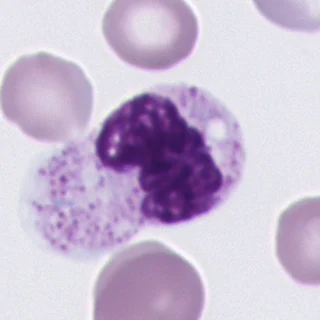
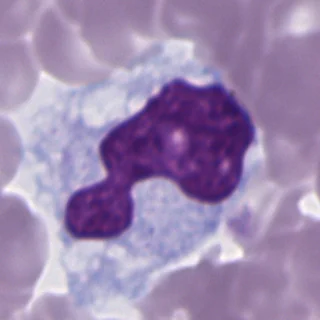
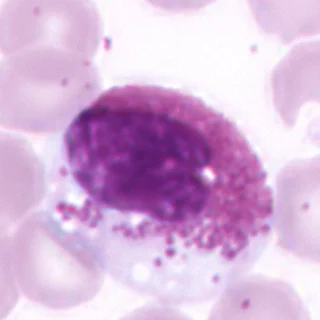
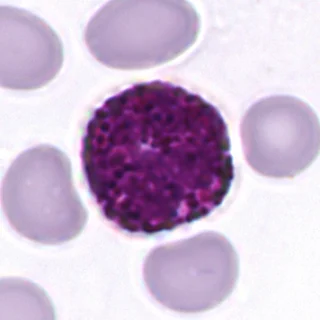
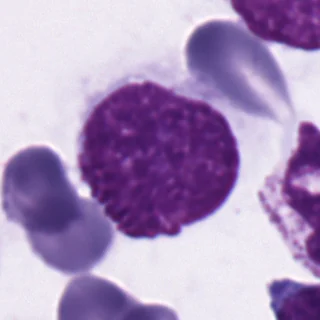
The images already exist — your analyzers make them every day. Hemalogic is pure software on top. It measures what a morphologist would measure — nuclear size, chromatin texture, the ratios that matter — and assembles the evidence into a report a pathologist can interpret in seconds.
We partner with laboratories and clinical researchers two ways: evaluation studies on research material today, and clinical studies to support a planned FDA submission for diagnostic decision support. If you run digital morphology and want either conversation — or the full technical validation summary — write to us.